Most fitness influencers have brand deals with Apple, Garmin, Fitbit or Samsung. Think about what that means for the information you're getting. None of those companies benefit from you knowing that their devices undercount or overcount steps depending on how you carry them. So most of the time, nobody tells you. The step count on your wrist or in your pocket might be off by 15 to 20% - and if you've been chasing a 10,000-step target, that gap is the difference between hitting it and falling consistently short without knowing why.
Why This Doesn't Come Up in Fitness Content
Influencer fitness content is built around aspirational products. Smartwatches photograph well. They have screens, features and subscription ecosystems. A £25 clip-on step counter does not generate affiliate revenue, does not pair with a monthly app and does not look good in a flat lay. So it doesn't get recommended - not because it doesn't work better for the specific job of counting steps, but because there's no financial incentive to say so.
The Journal of Sports Sciences published research finding that wrist-worn activity trackers overestimate steps by up to 15% during certain activities and underestimate during others. Phone apps - when the phone is in a bag or on a desk rather than in your hand - underestimate steps by up to 20%. A waist-worn dedicated step counter, by contrast, has an error rate of less than 5% when worn correctly. That gap exists in the research. It just doesn't exist in the content you see on your feed.

The Numbers - What Different Devices Actually Do
|
Device Type |
Where It Sits |
Real-World Accuracy |
Main Problem |
|---|---|---|---|
|
Phone step app |
Bag, desk, pocket - inconsistent |
Misses 15–20% when not in hand |
Only counts steps when you're carrying it |
|
Smartwatch / fitness band |
Wrist |
±10–15% depending on activity |
Arm movement registers as steps; restricted arms miss steps |
|
Clip-on waist pedometer |
Hip / waistband - consistent all day |
Under 5% error rate |
None - hip position captures actual walking motion |
The wrist problem is physics, not brand quality. Your wrist moves differently to your hip during a walk. When you're pushing a trolley, carrying shopping or walking with your arms less than fully swinging - which is most of real life - a wrist tracker is measuring the wrong thing. It either overcounts from incidental arm movement or undercounts because your arms aren't swinging enough to register. Your hip doesn't have this problem. It moves consistently with every step regardless of what your arms are doing.
What That Gap Actually Means for Your Goals
Run the numbers on a 20% undercount. If you think you're hitting 8,000 steps but your phone is missing 20% of them, you're actually doing 6,400. Over a week that's 11,200 steps less than you believe. Over a month, around 45,000. That's not a rounding error - it's a meaningful gap between the habit you think you're building and the one you're actually building.
The reverse matters too. A 15% overcount from a wrist tracker means hitting your 10,000-step target on screen might only represent 8,500 actual steps. You feel like you've succeeded. The metric says you've succeeded. Your body is doing something slightly different.
Neither version of this is your fault. But it's hard to fix a problem you don't know exists.

The Fix - And Why It Feels Anticlimactic
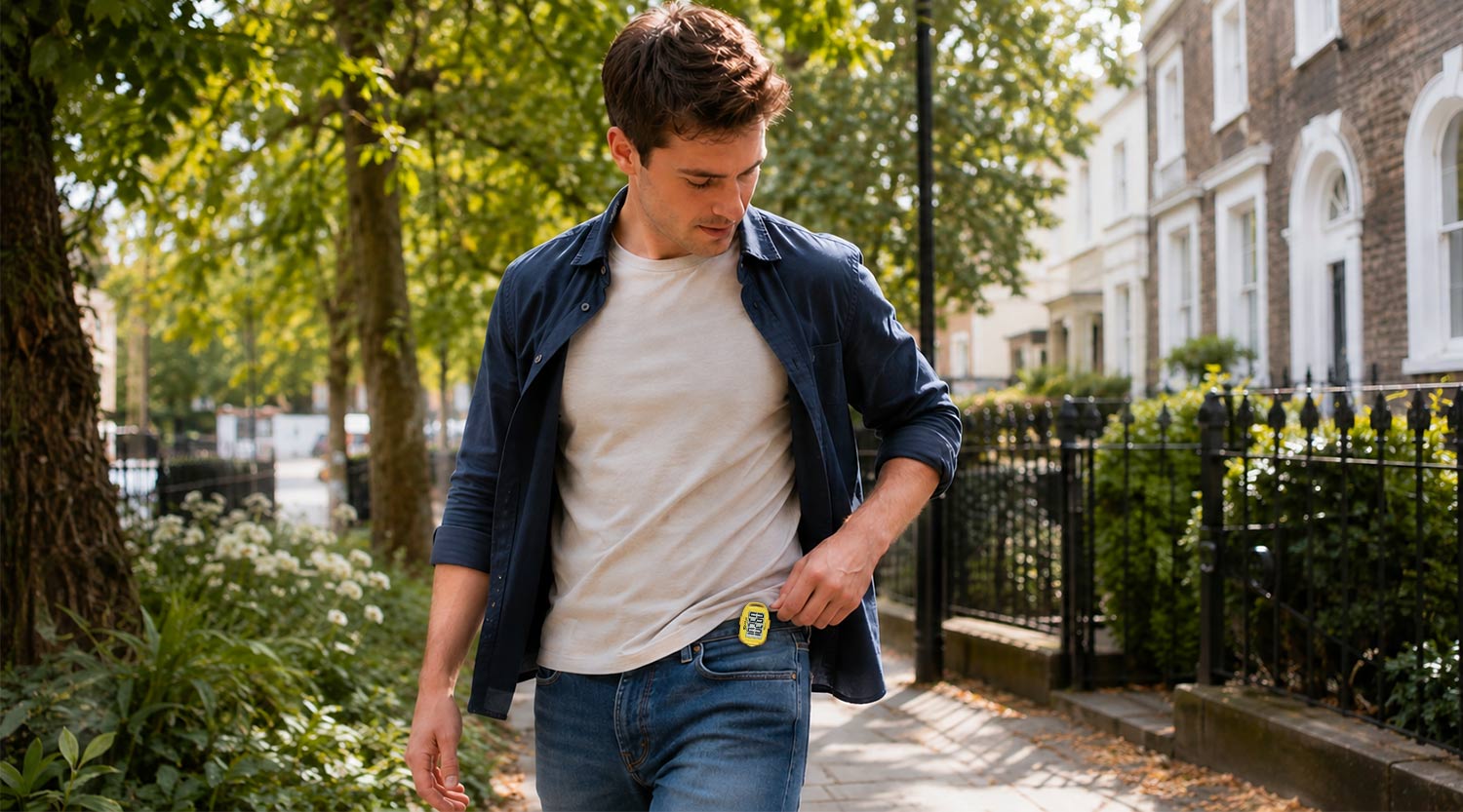
Clip a dedicated step counter to your waistband. That's it. Not a £300 smartwatch upgrade. Not a new app. A device that sits at your hip, counts every actual step from the first one in the morning, doesn't need your phone and doesn't run out of charge during the day.
The 3DFitBud uses a 3D tri-axis sensor which means it reads movement across all three planes simultaneously rather than relying on a single axis. That's what keeps the error rate under 5% even when you're walking with shopping bags, pushing a door open or moving in a way that would confuse a wrist sensor. It also has a 10-step filter built in, which ignores incidental movement - getting up from a chair, fidgeting and only counts actual walking strides. The result is a step count you can actually trust as a baseline for your goals.

FAQ's
-
How do I know if my current device is overcounting or undercounting?
The most reliable test is walking exactly 100 steps while counting manually, then checking what your device recorded. Anything outside 95–105 suggests meaningful inaccuracy. A waist-worn dedicated pedometer compared side-by-side with your current device for a full week will show the gap clearly - most people find it's larger than they expected.
-
Does it matter which pocket my phone is in?
Yes, significantly. A front trouser pocket gives a phone its best chance at accurate step counting because the phone moves consistently with your hip. A jacket pocket, back pocket or bag all reduce accuracy meaningfully. The problem is most people don't carry their phone in the same place all day - which is exactly why the reading fluctuates.
-
Is a smartwatch always less accurate than a clip-on pedometer?
For dedicated step counting in everyday conditions - yes, consistently. Smartwatches are more accurate during structured exercise with natural arm swing. For real life, with all its arm-restricted activity, a waist-worn pedometer wins on the specific metric of step count accuracy.
-
I've been using my phone's step count as my baseline for months. Should I start over?
Not necessarily. If you've been consistently underestimating, switching to an accurate device will show higher daily counts - which is actually motivating. The goal isn't to punish yourself for the old data. It's to build a target based on what's actually happening, not what a phone app estimated from a bag.
-
Why don't more people know about this?
Partly because it's not interesting content. "Your phone is slightly wrong" doesn't drive clicks the way "10 exercises for abs" does. And partly because the brands making the devices that are less accurate are the ones with marketing budgets large enough to dominate the conversation. The research has been there for years. It just doesn't have a PR team.
Know Your Actual Number - Not the Estimated One
The gap between your real step count and what your phone shows you is probably bigger than you'd expect. The 3DFitBud Simple Step Counter clips to your waistband, uses a 3D tri-axis sensor for under 5% error, runs for up to 12 months on a single battery and needs no phone to function. One week of accurate data changes how you think about your step habit - because you'll finally be working with real numbers.
Shop the 3DFitBud Now