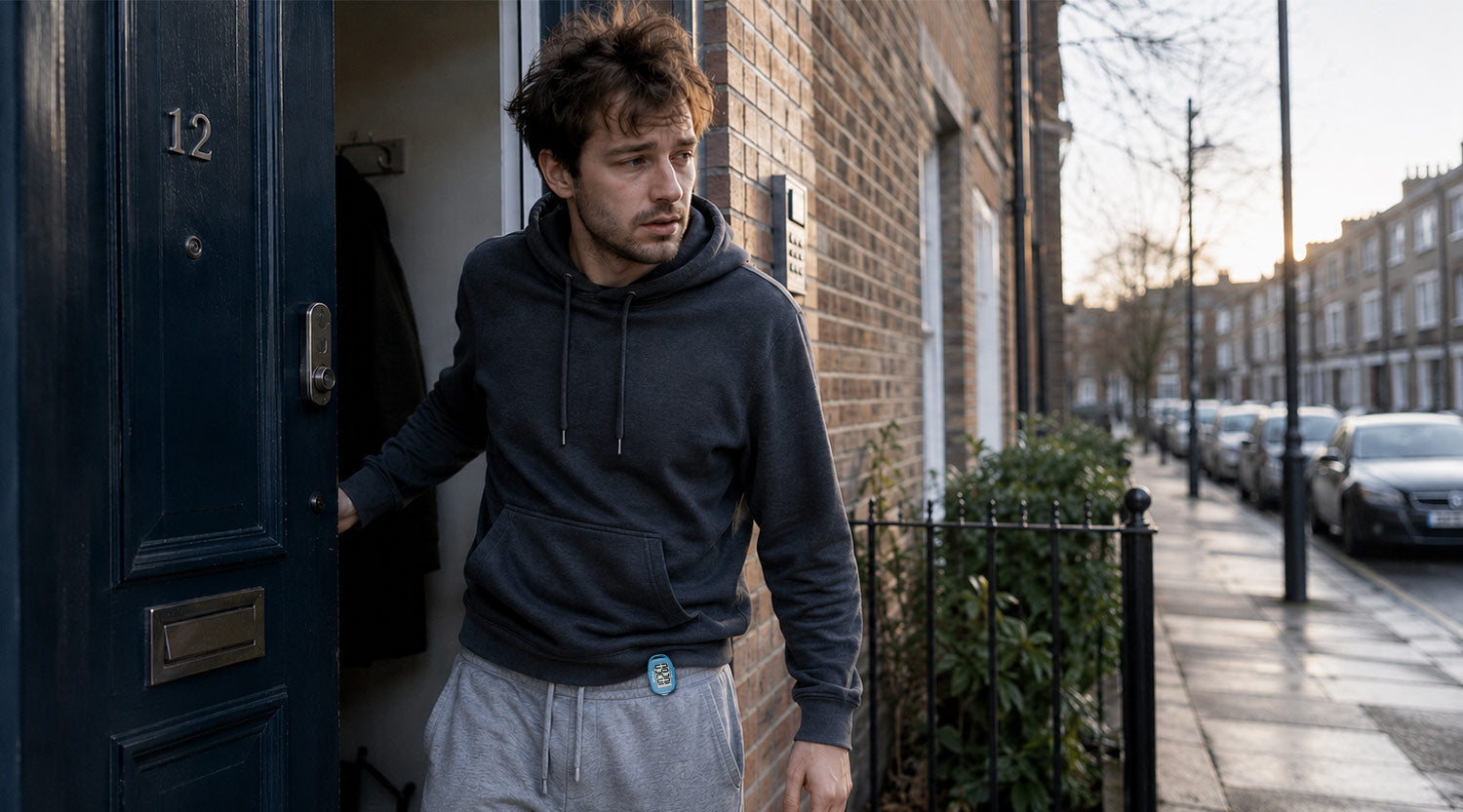
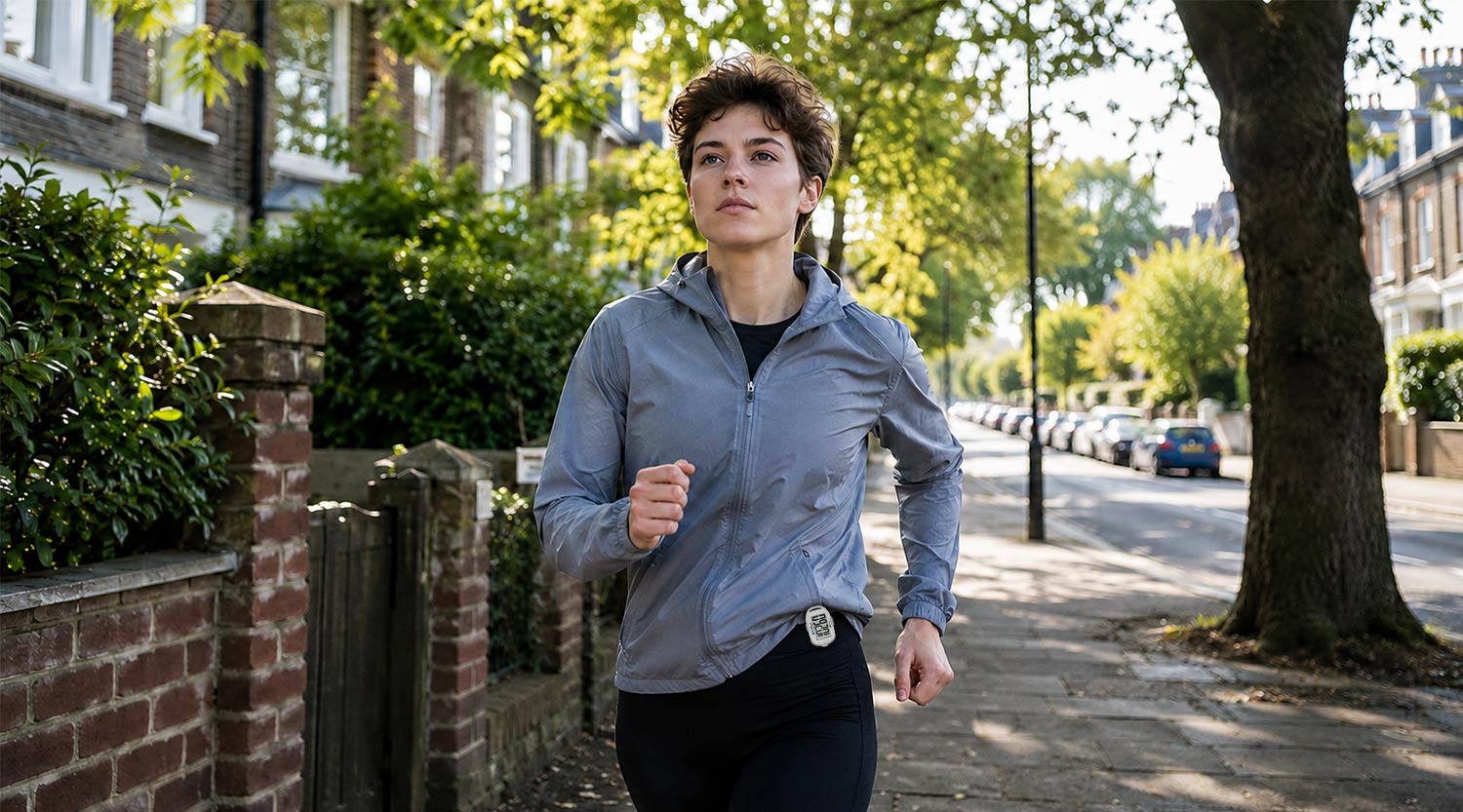
You sit down at 9am. You look up and it's 2pm. You've moved twice - once to make coffee, once to use the bathroom. By the time the day ends you've accumulated maybe 800 steps and you technically haven't left the house. This isn't a discipline problem. It's a design problem. The commute used to do the work for you. Without it, steps don't happen unless you make them happen deliberately. Here's how.
The WFH Step Gap Is Real - and Most People Underestimate It
Before remote working became normal, the average UK office commuter was getting 3,000 to 4,000 steps just getting to & from work - before they'd made any conscious decision to exercise. That's gone now. Studies on remote workers consistently show daily step counts dropping by 30 to 40% compared to in-office equivalents. For a generation that's been remote-first since their early twenties, that baseline was never there to begin with.
The problem isn't motivation. It's that WFH removes the natural movement architecture that an office day provides - the walk to the station, the trips between floors, the lunchtime detour to a sandwich place three streets away. None of that is dramatic exercise. But it stacks. And without it, you're starting from zero every day.
The fix isn't one long walk at 6pm. That's better than nothing, but it doesn't replicate what the commute did. What you actually need is movement distributed across the day - small, deliberate, non-disruptive. Here's what that looks like in practice.
The WFH Step Stack - How to Build 10,000 Without a Gym
Think of your day in blocks and attach movement to the transitions between them. None of these require changing clothes or leaving your workflow for more than a few minutes.
|
Time of Day |
Habit |
Approx. Steps Added |
|---|---|---|
|
Before you open your laptop |
15-minute morning walk - non-negotiable |
1,800-2,200 |
|
Mid-morning (10:30-11am) |
Walk while on a phone or audio call |
1,000-1,500 |
|
Lunch break |
Actual lunch break - walked, not eaten at the desk |
2,000-2,500 |
|
Mid-afternoon (3pm slump) |
10-minute reset walk around the block |
1,000-1,200 |
|
After work ends |
15-20 minute decompression walk |
1,800-2,200 |
|
Throughout the day |
Micro-habits (kitchen trips, standing up each hour) |
500-800 |
|
Daily total |
~8,100-10,400 |

The morning walk is the one that most remote workers skip. Don't. It's not about the steps - it's about the mental state. Going outside before you open your laptop changes how your first two hours go. Your brain gets daylight, movement and a cue that the workday is starting on your terms. The steps are a bonus.
Four Micro-Habits That Actually Stack Up
Walk all calls that don't need a screen. Most calls - check-ins, catch-ups, one-to-ones - don't require you to be sitting at a desk. The moment someone calls, stand up and move. A 20-minute call at a moderate pace is 2,000 steps you didn't have to plan.
The kitchen rule. Every time you go to the kitchen, take the long way. Loop the flat or house first. It sounds trivial. Over a full working day it adds 300 to 500 steps without a second thought.
Set a movement reminder, not a step reminder. Reminders to "hit 10,000 steps" don't work because they create pressure without instruction. A reminder that says "stand up and move for 3 minutes" every 90 minutes works because it's specific and small. Stack twelve of those across the day and you've added 1,500 steps before you've made any deliberate effort.
Track your steps from the moment you wake up - not just during deliberate walks. Most people check their step count at 9pm and realise they need 6,000 steps in two hours. That's not a habit - that's a scramble. A clip-on step counter like the 3DFitBud gives you a running total all day, clipped to your waistband, without needing to check your phone. Seeing 1,200 steps at 11am is the nudge that actually changes behaviour before it's too late in the day to fix it.

The Mindset Shift That Makes This Work
Stop thinking about exercise as something that happens outside of work hours. For a WFH person, the workday is the movement opportunity. The commute slot, the lunch break, the 3pm brain-fog slump - all of these are moments that were previously filled with involuntary movement and are now filled with more sitting.
Reclaiming those moments doesn't require a gym membership, a PT, or a significant lifestyle change. It requires a slight redesign of a day you're already living. The steps are already there in the structure of your day. You just need to find them.

FAQ's
-
What's a realistic daily step target for someone who works from home?
Start at 6,000 and treat it as a floor, not a ceiling. Research consistently shows that 6,000 to 8,000 daily steps produces meaningful health benefits - better than 3,000 and close enough to 10,000 that the gap isn't worth obsessing over. Once 6,000 feels automatic, push to 8,000. The number you actually hit every day is worth more than the number you aim for and miss.
-
Is one long walk better than several short ones?
For cardiovascular health, one long walk is fine. For step count, focus and avoiding the sedentary trap, distributed movement beats a single session. Multiple short walks mean you never go more than two hours without moving, which keeps your energy and focus steadier throughout the workday - especially if you're prone to the 3pm slump.
-
Does walking on a treadmill desk count?
Yes, every step counts. Treadmill desks are genuinely useful for remote workers if you have the space. The only watch-out is that very low-speed walking (under 1.5km/h) doesn't produce the same cardiovascular or neurochemical effect as a proper brisk walk. Use it for low-concentration tasks and supplement with a real outdoor walk at least once a day.
-
Can walking replace ADHD medication?
No. The research is clear on this - exercise is a meaningful supplemental intervention, not a substitute for medical treatment. What it can do is reduce symptom severity, improve the effectiveness of other treatments, & provide a free, immediate tool for managing difficult focus periods. Speak to your GP about how it fits alongside your current management plan.
-
My flat is tiny - I don't have room to pace. What do I do?
Outside is the answer. A 10-minute loop around your block or building is enough. The UK has footpaths everywhere - even in dense cities. The bar for "leaving the house for a walk" is lower than most WFH workers treat it. You don't need a park or a green space. A residential street at a brisk pace works.
Track Your Day, Not Just Your Workout
The steps that matter most for a WFH worker aren't the ones in your evening run. They're the ones scattered across the eight hours you're sitting at a desk. The 3DFitBud Simple Step Counter clips to your waistband and counts every single one - the kitchen trip, the call you took standing up, the lunchtime loop around the block. No phone. No charging.
Shop the 3DFitBud Now