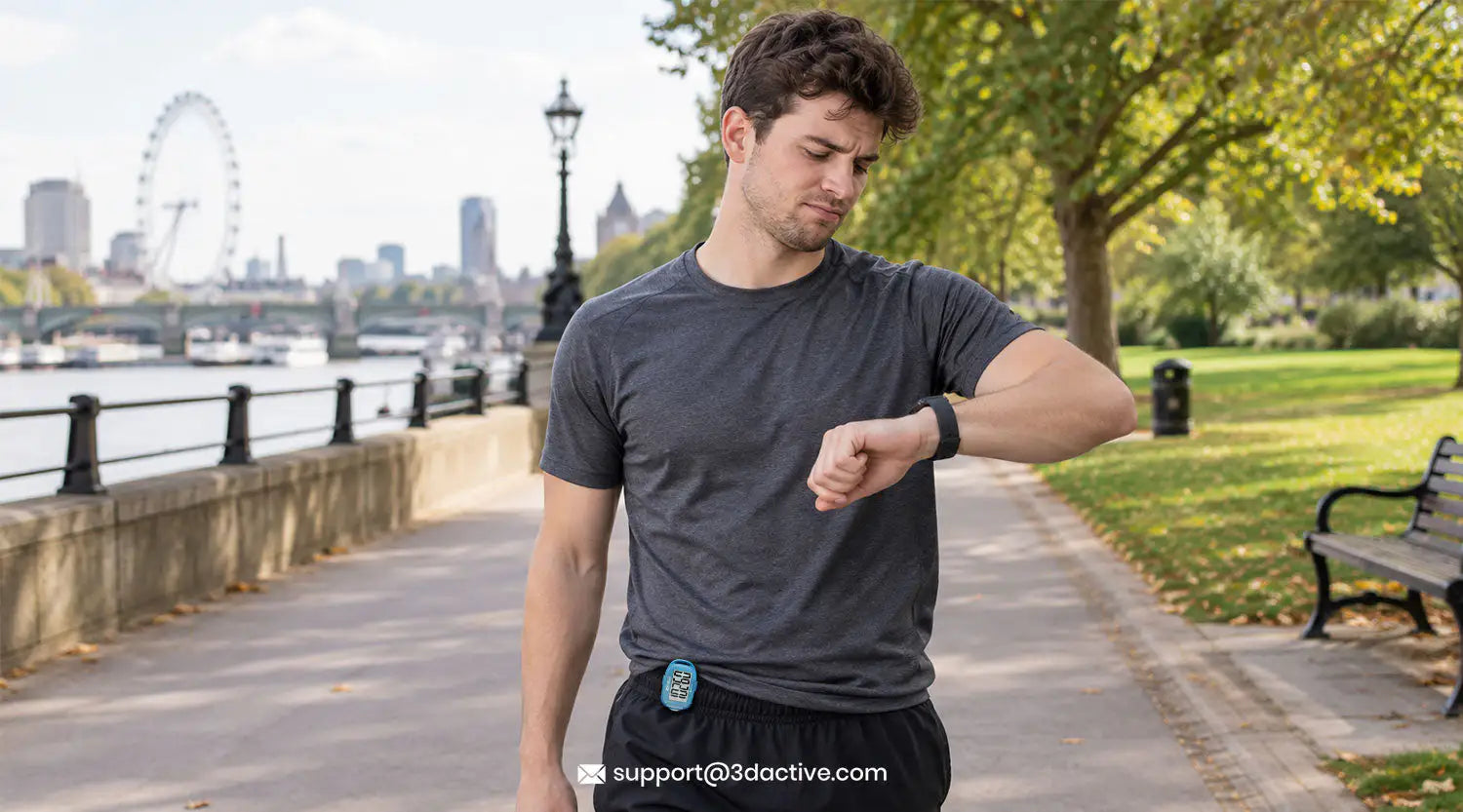
This isn't a post about fresh air and thinking positive. Depression is a clinical condition and deserves a proper answer, not the usual wellness lines. Walking keeps coming up in mental health guidance for one reason: it changes brain chemistry in ways that counter what depression drains. A GP suggesting a daily walk isn't brushing you off, they're going by the research.
How walking cures the same problem as antidepressants
Depression is largely a chemical problem. Serotonin, dopamine and norepinephrine tend to run low and antidepressants keep those chemicals around longer. Walking works a different angle: it raises BDNF, a protein that repairs and grows neurons in the areas depression hits hardest, the hippocampus especially.

In 2023 the British Journal of Sports Medicine pooled 97 reviews covering over 128,000 people. Physical activity, walking included, led to real drops in depression symptoms, roughly what you'd expect from medication or therapy. It wasn't a head-to-head test, so treat "as good as a pill" as a fair summary, not proof. The mechanism is the solid part: that endorphin lift fades within the hour, but BDNF builds week after week and slowly reshapes the brain, which is why turning up regularly beats pushing hard.
Why your GP can genuinely prescribe this
Social prescribing has been part of the NHS Long Term Plan since 2019. In plain terms, a GP can refer you to non-medical community activities, walking schemes included, through a Social Prescribing Link Worker. Walking groups and guided outdoor sessions are now among the most common referrals for mild depression across NHS England.
The current NICE guidance, NG222 from 2022, lists group exercise among the first options a GP can offer for less severe depression, to try before or alongside medication depending on the person.

The catch and how to get around it
Here's the hard part. Depression drains your motivation and that isn't a side issue, it's a core symptom. So asking someone with depression to walk daily is sound medicine and a tough ask at once. A few things help.
Lean on a number, not willpower. "Go for a walk" is vague and vague is what feels impossible on a bad day. A figure like 3,000 or 4,000 steps gives you something concrete to aim at. A clip-on counter like the 3DFitBud shows the total when you get home, no phone involved.
Make the goal almost embarrassingly small. Ten minutes, once round the block. Even a short walk shifts your mood noticeably and the bar is lower than people think.
Look at your good days, not your bad ones. Depression warps your sense of time, so one rough week feels like every week. A counter with 30-day memory shows the days you did get out, pushing back on the sense that nothing's changing.

Where walking sits next to everything else
|
Option |
Best For |
What walking adds |
|---|---|---|
|
Antidepressant medication |
More severe depression |
Works through BDNF, so the two stack up |
|
Talking therapy (CBT, counselling) |
Thoughts and behaviour |
A steadier baseline that helps therapy land |
|
Social prescribing |
Mild depression, isolation |
Routine, structure and time outdoors at once |
|
Walking on its own |
Mild depression, prevention |
A daily reset without anything clinical |
FAQ's
-
Can walking replace antidepressants?
For less severe depression, NICE treats exercise as a first thing to try. If yours is more severe, walking works best alongside medication or therapy, not instead of them. Either way, never stop prescribed medication without talking to your GP first.
-
How soon will I notice a difference?
Most studies see mood lift within two to four weeks if you walk most days. Deeper BDNF changes take six to eight weeks. Regularity does the work, not effort.
-
What if I just can't make myself go?
That's the depression talking, not a flaw in you. Keep the first step tiny: shoes on, front door open. A 2,000-step target is easier to face than an open-ended "walk," and even 1,000 on a bad day beats staying put.
-
Does the route matter?
Green spaces seem to help a bit more than pavement, since nature gives your mind less to churn on. Still, any walk outdoors beats none, so don't let a dull route keep you in.
-
How do I track it without living on my phone?
A clip-on pedometer is the simplest option. The 3DFitBud sits on your waistband, counts all day on its own and shows your total when you're back. On the days depression insists you did nothing, a number you can see says otherwise.
Small steps. Real chemistry. Every day.
The evidence for walking as a way to manage depression is stronger than most people assume and stronger than a rushed ten-minute appointment can get across. The 3DFitBud Simple Step Counter gives you a daily total, no phone in the way. When every decision feels like too much, one number is enough to start.
Shop the 3DFitBud Now