If your knees hurt, the instinct is to rest them. That feels logical - & for a short flare, it can be right. But long-term, avoiding movement is one of the worst things you can do for knee pain. Over 5.4 million people in the UK live with knee osteoarthritis & the clinical evidence is now very clear: walking is one of the most effective treatments available. As highlighted in comprehensive Knee pain treatment guides, here’s how to do it safely.
Why Walking Helps Rather Than Hurts
Your knee cartilage has no direct blood supply - it gets its nutrients through movement. When you walk, the compression & release of the joint pushes fluid through the cartilage, keeping it nourished & pliable. Stop moving & that process slows down significantly.
A landmark 2025 BMJ meta-analysis of 217 randomised trials confirmed that aerobic exercise - primarily walking - is the most effective first-line treatment for knee osteoarthritis pain & function, outperforming flexibility, strength & mind-body approaches. Walking also builds the quadriceps muscles that sit above the knee - & stronger quads mean less load on the joint with every step.
What Different Walking Approaches Do for Your Knees
| Walking Approach | Knee Benefit | Who It Suits Best |
|---|---|---|
|
Short flat walks - 10 mins, gentle pace |
Lubricates joints, reduces morning stiffness |
Anyone just starting out or in a flare |
|
20-30 mins brisk walking 3x per week |
Strengthens quad muscles that protect the knee joint |
Mild to moderate knee OA, post-physio |
|
Daily step habit - 5,000-7,000 steps |
Maintains cartilage health, reduces long-term pain |
Ongoing knee OA management |
|
Walking with tracking - consistent habit |
Motivation & measurable progress toward GP targets |
Anyone managing chronic knee pain |

Safe 4-Week Walking Plan for Knee Pain
Important:If you've been diagnosed with knee OA or are recovering from a knee injury, check with your GP or physiotherapist before starting this plan.
-
Week 1:Walk for 10 minutes on flat ground at a gentle, comfortable pace. Go every other day. Stop if you feel sharp pain.
-
Week 2: Increase to 15 minutes. Begin to notice your footwear - cushioned, supportive trainers reduce knee impact significantly.
-
Week 3: Walk 20 minutes, 4 times this week. Introduce a slight increase in pace on one of those sessions.
-
Week 4+: Build toward 5,000-6,000 daily steps. Use a pedometer to track progress & identify which days your knees feel better or worse.

Tips for Walking With Knee Pain
-
Always warm up first. Five minutes of gentle movement - ankle circles, slow marching on the spot - reduces knee stiffness before you step outside.
-
Choose soft surfaces when possible. Grass, packed trails, or rubber-tracked paths absorb more impact than concrete pavements.
-
Shorten your stride, not your speed. Smaller steps reduce the force transferred to the knee. This is one of the most evidence-backed gait adjustments for knee OA.
-
Track your daily steps. Knowing your count helps you build up gradually rather than overdoing it on a good day & paying for it the next.
When to Slow Down
-
Some mild aching during or after a walk is normal when you're building back up. Sharp, sudden, or swelling pain is not - stop & rest if that happens.
-
Avoid hills & stairs early in your plan. Inclines significantly increase the load on the knee joint.
-
Don't push through a flare. Take 1-2 rest days, then restart at the previous week's level, not where you left off.

FAQ's
-
Should I walk if my knees are already painful?
Gentle walking is usually beneficial even during mild pain - it lubricates the joint & reduces stiffness. But if the pain is severe, swollen, or follows an injury, rest & see your GP first. Never walk through sharp or worsening pain.
-
How long before walking improves knee pain?
Most people notice a reduction in stiffness within 2-3 weeks of consistent gentle walking. Meaningful pain reduction & improved function typically shows within 6-12 weeks, which aligns with what clinical trials have found.
-
Is walking better than cycling for knee pain?
Both are effective. Cycling is slightly lower impact for the joint, but walking builds functional strength more directly. The 2025 BMJ review found both produced similar pain & function outcomes - the best one is whichever you'll actually do consistently.
-
Will walking make my knee osteoarthritis worse?
No - this is a very common misconception. Multiple large studies including the 2025 UK Biobank analysis have confirmed that regular walking does not accelerate cartilage loss. In fact, inactivity is more strongly linked to OA progression than moderate walking.
-
How do I know if I'm doing too much?
A good rule of thumb: if your pain level is more than 2 points higher after a walk than before (on a scale of 1-10), you've done too much. Tracking daily steps with a pedometer helps you build up at a controlled, measurable pace rather than guessing.
Get a Step Count You Can Actually Trust
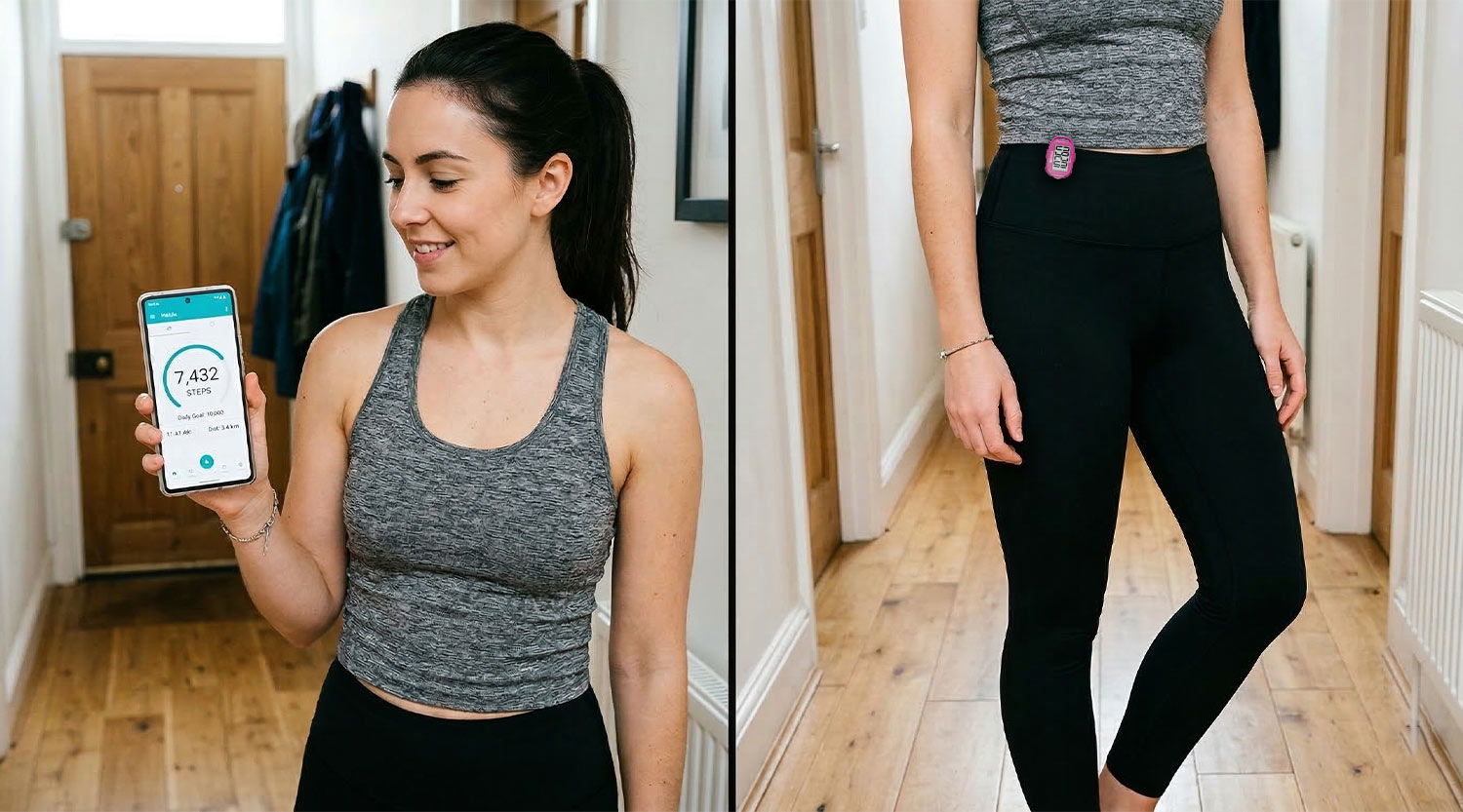
If your health goal depends on hitting a daily step target, a number that's off by 1,500 steps isn't just inaccurate - it's misleading. The 3DFitBud Simple Step Counter clips to your waistband & tracks only genuine walking steps, all day, every day. No phone needed. No charging. No guesswork.
Shop the 3DFitBud Now