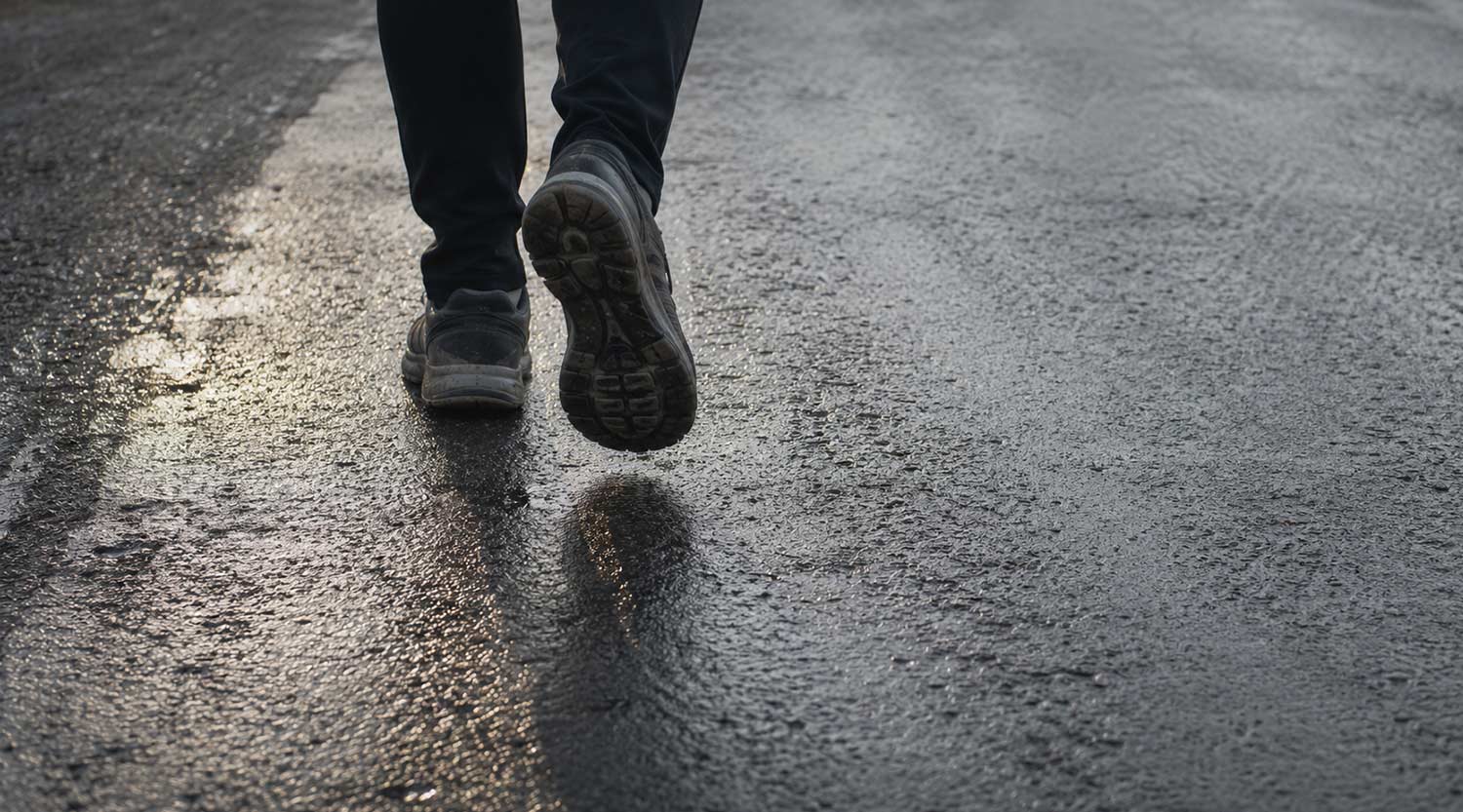
The advice most people with arthritis get is some version of "be careful." Don't overdo it. Listen to your body. Rest when it hurts. And look - some of that is reasonable. But taken too far, it becomes the reason people end up barely moving at all. And barely moving is genuinely one of the worst things you can do for arthritic joints.
This isn't about pushing through pain. It's about understanding that the joints giving you grief actually need to move to stay functional. Rest doesn't heal cartilage. Movement does.
What's Actually Happening Inside the Joint When You Walk
Cartilage has no blood vessels running through it. None. It gets its nutrients from synovial fluid - the liquid inside the joint - & that fluid only circulates properly when the joint is being compressed & released. Walking does that. Sitting doesn't.
So when someone stops exercising because their knees hurt, the cartilage starts getting less of what it needs to stay healthy. It dries out. The joint space narrows faster. The muscles around the knee weaken because they're not being used, which means the joint is absorbing more direct impact with every step they do take. Pain increases. They move even less. You can see where this goes.
A study in Walking Arthritis & Rheumatology - a four-year follow-up of adults with knee osteoarthritis - found that people who walked regularly were 40% less likely to develop new daily pain compared to those who didn't. That's a large number & it's held up across enough research that it's not a fluke. It's also why most rheumatologists now say movement is medicine, not a risk.
Walking also reduces systemic inflammation over time, which matters because arthritis isn't purely a mechanical problem. There's an inflammatory component driving a lot of the pain & joint damage. Medication manages it from one direction. Consistent aerobic exercise - even 20 minutes of walking - manages it from another.

The Walking With Arthritis Tips Nobody Leads With
Start shorter than feels worth it. Genuinely. If you've been mostly sedentary, ten minutes on a flat surface is a real session. Not a warmup, not a consolation prize - an actual session. The reason this matters is that one bad flare from doing too much, too early, can mean two weeks of reduced activity. That's not a trade worth making just to feel like you did enough on day one.
Warm up before you go outside. Not a stretch - movement. Ankle circles, slow knee bends, hip rotations, five minutes of that before you load the joint. Cold joints don't absorb impact well. That stabbing pain people get ten minutes into a morning walk is almost always a cold-joint problem, not a you-shouldn't-be-doing-this problem.
Shoes. This sounds boring but it matters enormously. Worn-out trainers with dead foam in the heel are adding impact to every step & if your knees or hips are already inflamed, that accumulates fast. You want real cushioning, a slightly rockered sole so the toe-off motion is easier & enough room in the forefoot. Hoka Bondi, Brooks Ghost, New Balance 1080 - all solid. And replace them on time. The cushioning breaks down around 300 to 400 miles. The shoe looks fine. The foam isn't.
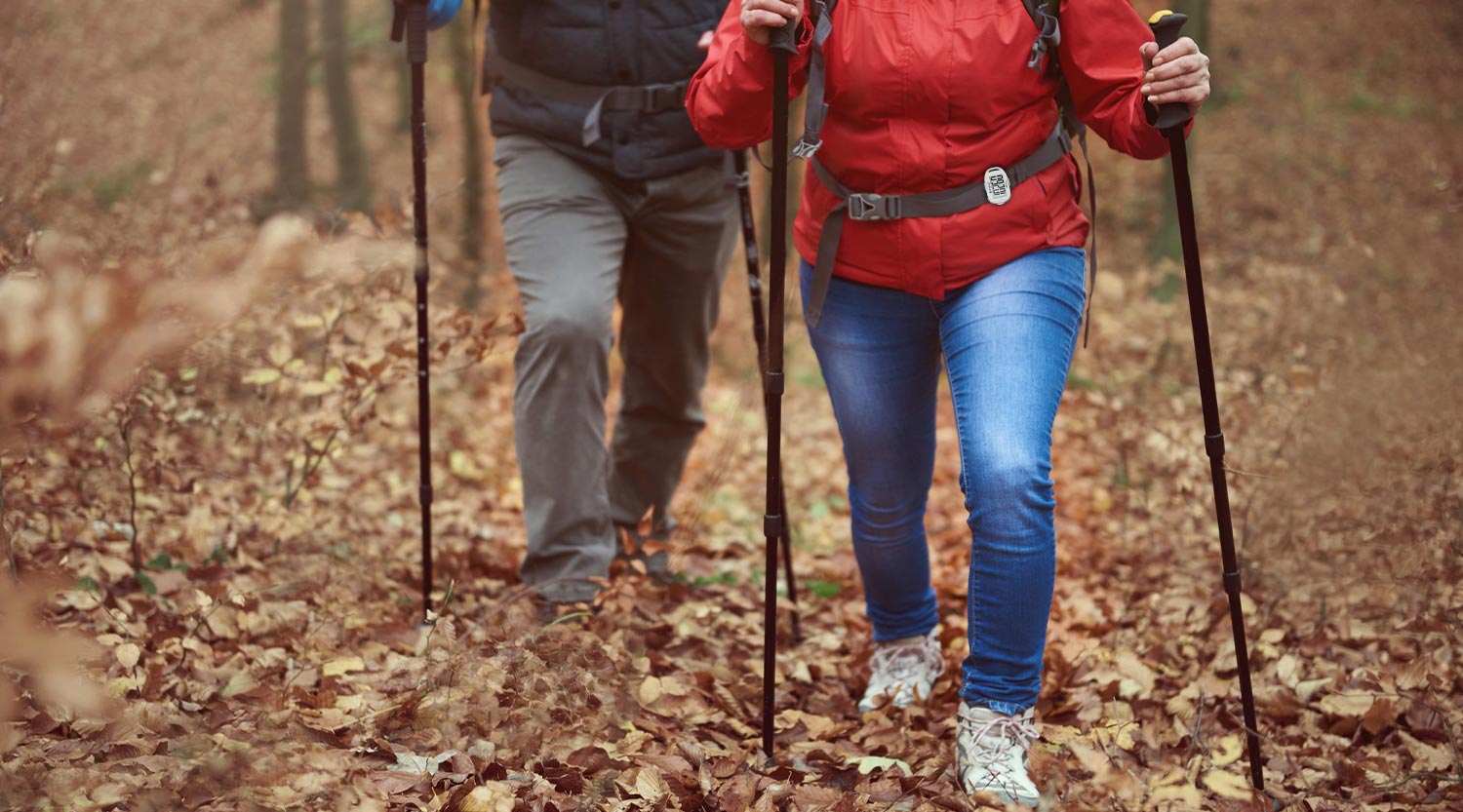
Walking poles make a bigger difference than most people expect. For knee & hip arthritis specifically, Nordic walking poles - not a cane, not trekking poles, actual Nordic walking poles like the ones 3D Active make - offload roughly 25% of the impact from your lower joints by actively engaging your arms & shoulders throughout the stride. That's not a small reduction. Over a 30-minute walk, that's thousands of steps where your knee is taking less hit than it would otherwise. The strap system on proper Nordic poles means your whole arm is working, not just your wrist leaning on a stick.
Slow down if your form is going. A clean heel-to-toe walk at a moderate pace does more for the joint than a fast shuffle with your weight dumping forward. Posture - shoulders back, light core engagement - isn't just aesthetic. It changes how load travels through the hip & knee.

Building Mileage Without Triggering Flares
The 10% rule is worth following. Don't increase your total weekly walking time by more than 10% from one week to the next. It feels unnecessarily cautious. It isn't. Your cardiovascular system will adapt faster than your cartilage, tendons & joint lining will. You'll feel capable of more before your joints are actually ready for more. That gap is where flares come from.
Know the difference between working discomfort & a warning sign. Mild achiness during a walk that clears up within an hour of finishing is normal & acceptable. Sharp pain during the walk, or pain that's noticeably worse the following morning, means something needs adjusting - distance, surface, footwear, pace, or some combination.
Bad weather tightens everything up & makes people skip sessions. Cold, damp conditions genuinely do increase stiffness. On those days, a treadmill works. So does a shopping centre, an indoor track, a long corridor. The goal is five sessions a week, consistently, across months. Where you walk is much less important than whether you walk.
Write down how you feel two hours after each session & the next morning. Takes ten seconds. Do it anyway. Patterns become obvious within two or three weeks - certain routes, certain surfaces, certain durations that reliably cause issues. Without the notes, you're guessing.

FAQ's
-
Is walking safe during a flare-up?
Shorten it, don't skip it. Ten minutes on flat ground is enough. Stopping entirely during flares weakens the surrounding muscles & usually leaves the joint stiffer, not better.
-
What's the best surface to walk on with arthritis?
Flat & even - paved paths, treadmills, athletics tracks. Uneven ground & road cambers force unpredictable lateral load through already stressed joints. Avoid them when possible.
-
Should I walk through morning stiffness?
Yes. Arthritis-related morning stiffness eases with movement, usually within 20 minutes. Sitting & waiting for it to pass just prolongs it. A short walk is the fastest way through it.
-
Do walking poles actually help or is that overstated?
It's not overstated. Nordic walking poles reduce lower-joint impact by up to 25% per stride. For knee & hip arthritis especially, that reduction across a full walk adds up to a meaningful difference.
-
How many days a week should I be walking?
Five is the target. Start with a duration that doesn't cause a next-day flare & build from there. Frequency first, distance second - that's the order that works.
Joints That Move, Hurt Less - Track Every Walk
The hardest part isn't the walk itself. It's staying consistent when pain makes it easy to skip. The 3DFitBud Simple Step Counter clips to your waistband, counts every step, needs no charging & no phone. No app, no setup, no excuses. Put it on, walk, check the number. Do it again tomorrow.
Shop the 3DFitBud Now