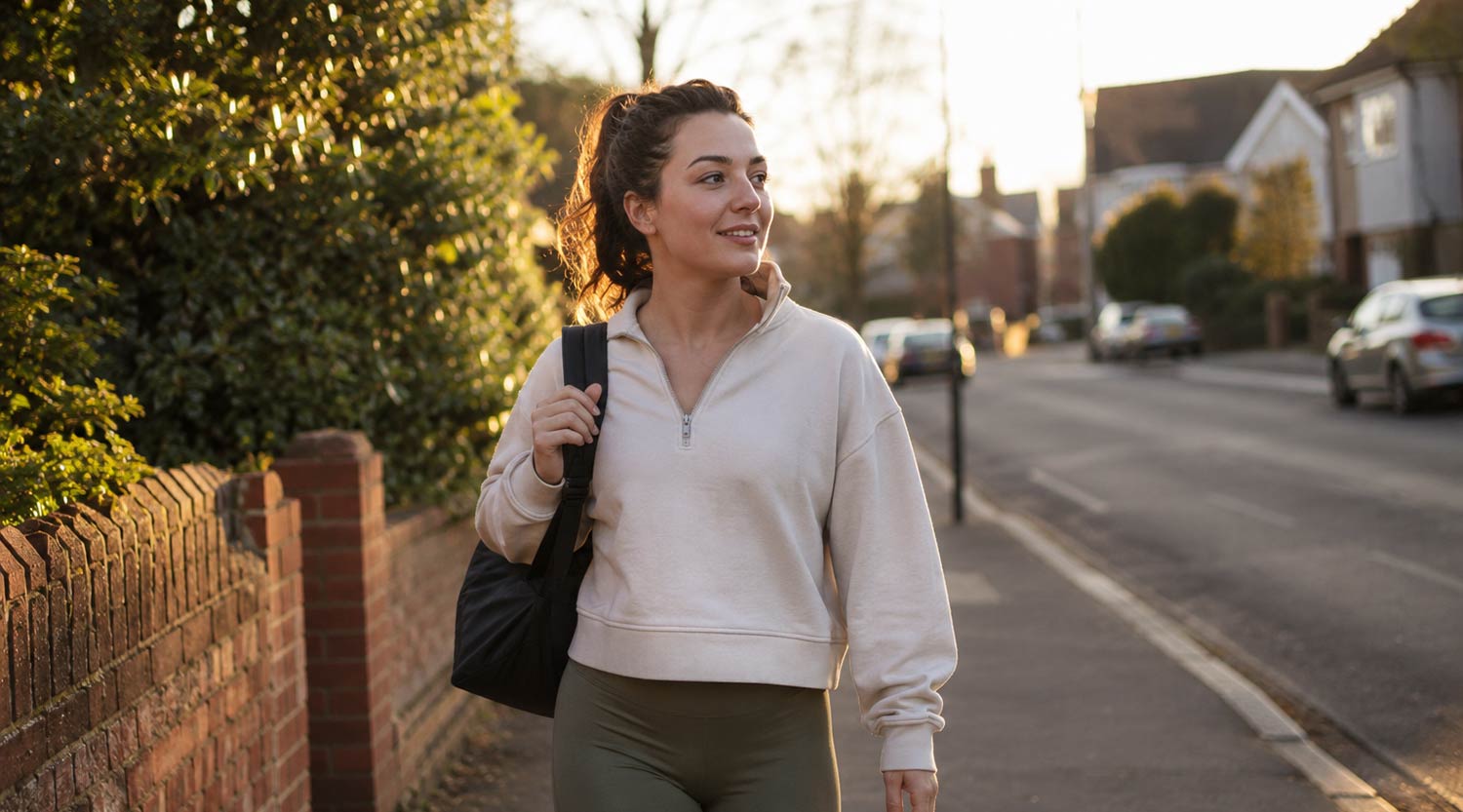
You've done the walk. Same route, same pace, same podcast. And at some point - maybe last week, maybe last month - you looked at your step count & thought: is this actually doing anything anymore?
That feeling is your body telling you it's adapted. Walking is brilliant, but once you're used to it, the returns plateau. Your heart rate barely climbs. Your legs cruise on autopilot. You're moving, but you're not really training.
Rucking changes that. And it does it without adding a single thing to your schedule.
So What Actually Is Rucking?
Load up a backpack. Go for a walk. That's it.
Rucking comes from military training - soldiers have always covered ground carrying heavy kit & the fitness results speak for themselves. But you don't need a bergwqen or a sergeant yelling at you. A regular daysack with 5 to 8kg inside does the job. Books, water bottles, a bag of rice - whatever you've got that adds weight.
The load is the whole point. It turns a moderate walk into something your body actually has to work for.

Why It Works When Normal Walking Stops
Adding weight to your back changes the demands of every single step. Your glutes fire harder. Your core braces constantly to keep you upright. Your cardiovascular system works at a higher intensity even though your feet are doing essentially the same thing.
The numbers back this up. Walking burns roughly 80 calories per mile for an average adult. Ruck with 10kg on your back & that figure climbs by 30 to 40 percent same pace, same route, significantly more output. Research published in the Journal of Strength & Conditioning Research found that load carriage walking produced measurable improvements in VO2 max, the marker of cardiovascular fitness usually associated with running.
For anyone who finds running too punishing on their knees - or who just hates it - rucking sits in a genuinely useful gap. It's hard enough to build real fitness. It's low-impact enough to keep doing week after week without breaking down.
How to Actually Start (Without Overthinking It)
You don't need specialist gear. Here's what a sensible first few weeks looks like:
-
Start with 5 to 8kg. Enough to feel it, not enough to hurt yourself.
-
Pack sits high & tight on your back - not dangling off your shoulders like you're heading to a festival. Poor positioning causes lower back strain fast.
-
Aim for 3 to 4 miles at a brisk pace. That's roughly 45 to 60 minutes of real effort.
-
Go twice a week to start. Add distance or weight every two to three weeks, not every session.
-
Track your steps properly. More on this in a minute - your smartwatch isn't the right tool for this.
The progression is what makes rucking so good long-term. As you get fitter, you add weight or distance. The challenge keeps moving with you, which means your fitness keeps moving too. It works on city streets, park paths, canal towpaths, or proper hills if you've got them nearby.
What Eight Weeks of Rucking Actually Does to You
People tend to notice a few things fairly quickly:
-
Posture gets better, sometimes noticeably so. Carrying weight on your back forces you upright. The muscles that are supposed to hold your spine in position stop being ignored.
-
Legs & glutes develop real strength. Rucking loads your lower body differently to flat walking, especially on inclines. Hills become a completely different experience.
-
Resting heart rate drops. Consistent aerobic work at moderate intensity is one of the most reliable routes to a better cardiovascular baseline. Not flashy, but it compounds.
-
Sleep improves. This one surprises people. Physical tiredness from rucking is the productive kind - the kind your body actually knows how to recover from.
Why Your Smartwatch Will Undercount Your Ruck Steps
This matters if you're tracking progress week to week.
When you're carrying a loaded pack, your arms don't swing the way they normally do. They become more controlled, more deliberate, or they're gripping straps. A wrist-based tracker reads reduced arm movement as fewer steps - & on a ruck day, it can miss 15 to 25 percent of your actual steps. Your effort goes unrecorded.
A hip-mounted step counter measures from your centre of gravity, where your stride actually generates movement. It doesn't care what your arms are doing. For rucking specifically, the difference in placement between wrist & waist is significant. We go into the full comparison in our piece on pedometer vs smartwatch step accuracy - worth a read if you want the detail.

Give It Three Weeks Before You Judge It
The first ruck is always a bit of a shock. Your back aches in places you forgot existed. Your pace is slower than you expected. You'll wonder if you've massively overloaded it.
By week three, something shifts. The pack feels manageable. Your pace picks up. And you realise you've been outside, moving with real purpose, three times a week without once thinking about going to a gym.
That's the thing about rucking that doesn't show up in the fitness data. It's just a walk. A hard one, but a walk. And almost everyone can do that.
FAQ's
-
How much weight should I start rucking with?
5 to 8kg is the right range for most people. It's enough to feel the load without hammering your lower back before your body's ready for it. Add weight gradually - a couple of kilos every three to four weeks once the current load stops feeling challenging.
-
Can I ruck every day?
Two to three times a week is plenty when you're starting out. Rucking is low-impact but it's still a real physical load & recovery matters - especially as the weight goes up. Some people work up to daily rucking after several months, but there's no need to rush it.
-
Do I need a special rucksack?
No. Any daysack that sits close to your back & can hold weight securely works fine. Purpose-built kit from brands like GORUCK is excellent if you get serious about it, but a regular hiking pack sees most people through their first several months without issue.
-
Where can I ruck in the UK
Anywhere with ground under your feet. Pavements, parks, canal paths, national trails - all of it works. The Peak District, South Downs & Cairngorms are obvious weekend destinations if you want proper hills. For weekday sessions, your existing walk becomes a ruck the moment there's weight on your back.
-
Is rucking better than running for losing weight?
Rucking burns fewer calories per mile than running at pace - but the question misses the point slightly. The real advantage is that people actually keep doing it. It doesn't wreck your joints, it fits into a normal day & it doesn't feel like punishment. Consistency over months beats intensity over weeks every single time.
Ready to ruck?
Clip a 3DFitBud Step Counter to your waistband before you head out it'll give you accurate step data even with a fully loaded pack. Your Apple Watch won't & now you know why.
Shop the 3DFitBud Now