Nobody is telling you to give up your phone. That's not what this is. It's about sequence - specifically, what happens to the rest of your day depending on whether you walk first or scroll first. The research on this is more concrete than most morning routine content suggests and the difference between the two mornings is measurable by 11am. Here's what's actually going on and how to use it.
What Your Brain Is Doing in the First 30 Minutes After You Wake Up
Your body has a built-in morning energy system that most people short-circuit before they've got out of bed. It's called the cortisol awakening response - a natural spike in cortisol that occurs in the 30 to 45 minutes after waking. This isn't stress cortisol. It's the good version - the one that sharpens focus, lifts mood and prepares your brain for decisions and demands. It's your body's own pre-built productivity tool and it fires every single morning whether you cooperate with it or not.
Here's the problem. Checking social media, news apps, or messages in that same window floods your brain with social comparison, external demands and low-stakes dopamine hits before the cortisol response has done its work. The result isn't more energy. It's a blunted spike, a scattered morning and a cognitive baseline that's already slightly reactive before the day has made a single actual demand on you.
Walk outside in that same 30-to-45-minute window & the opposite happens. Natural daylight directly amplifies the cortisol awakening response. Movement reinforces it. Your brain gets the morning energy surge it was already preparing to deliver - and you spend the rest of the morning working with your own biology rather than against it.
The Two Mornings - What Actually Changes
Most people have experienced both versions of this without realising the variable was the sequence, not the morning itself.
|
What You Notice |
Scroll-First Morning |
Walk-First Morning |
|---|---|---|
|
Mental state by 9am |
Slightly scattered, already behind, mildly reactive |
Clearer, calmer, easier to start things |
|
First task of the day |
Takes longer to get into than expected |
Easier to start - friction is lower |
|
Social comparison effect |
Already triggered - someone else's highlight reel is your first input |
Not triggered yet - your own thoughts are the first input |
|
Cortisol awakening response |
Blunted by screen stimulation before it completes |
Amplified by light exposure and movement |
|
Steps by 9am |
Zero to minimal |
2,500–3,500 already accumulated |
|
Afternoon energy |
Depends heavily on how the morning went |
More consistent - morning momentum carries |

The social comparison row is worth sitting with. The first thing a scroll does is show you other people's carefully edited lives. That comparison - even when it's unconscious, even when you're aware of it - creates a low-level stress signal that follows you into the morning. Starting with a walk means your first input is your own thoughts, your own environment, your own pace. That's not a spiritual claim. It's just a description of what happens when you remove a stressor from the first ten minutes of your day.
How to Build the Habit - Especially If You're Not a Morning Person
This doesn't require waking up earlier. It requires doing things in a different order for the same amount of time you're already awake before work.
-
Step 1 - The night-before setup. Put your walking shoes next to the bed. Put your phone on the other side of the room. Both take five seconds and remove two decisions from a morning when your willpower is lowest. The first thing you reach for when you wake up should be your shoes, not your screen.
-
Step 2 - A 20-minute minimum to start. Not a long walk. Not a planned route. Just outside for 20 minutes before the phone comes out. Daylight - even through August cloud cover - is doing specific work on your circadian rhythm and cortisol response that indoor light cannot replicate.
-
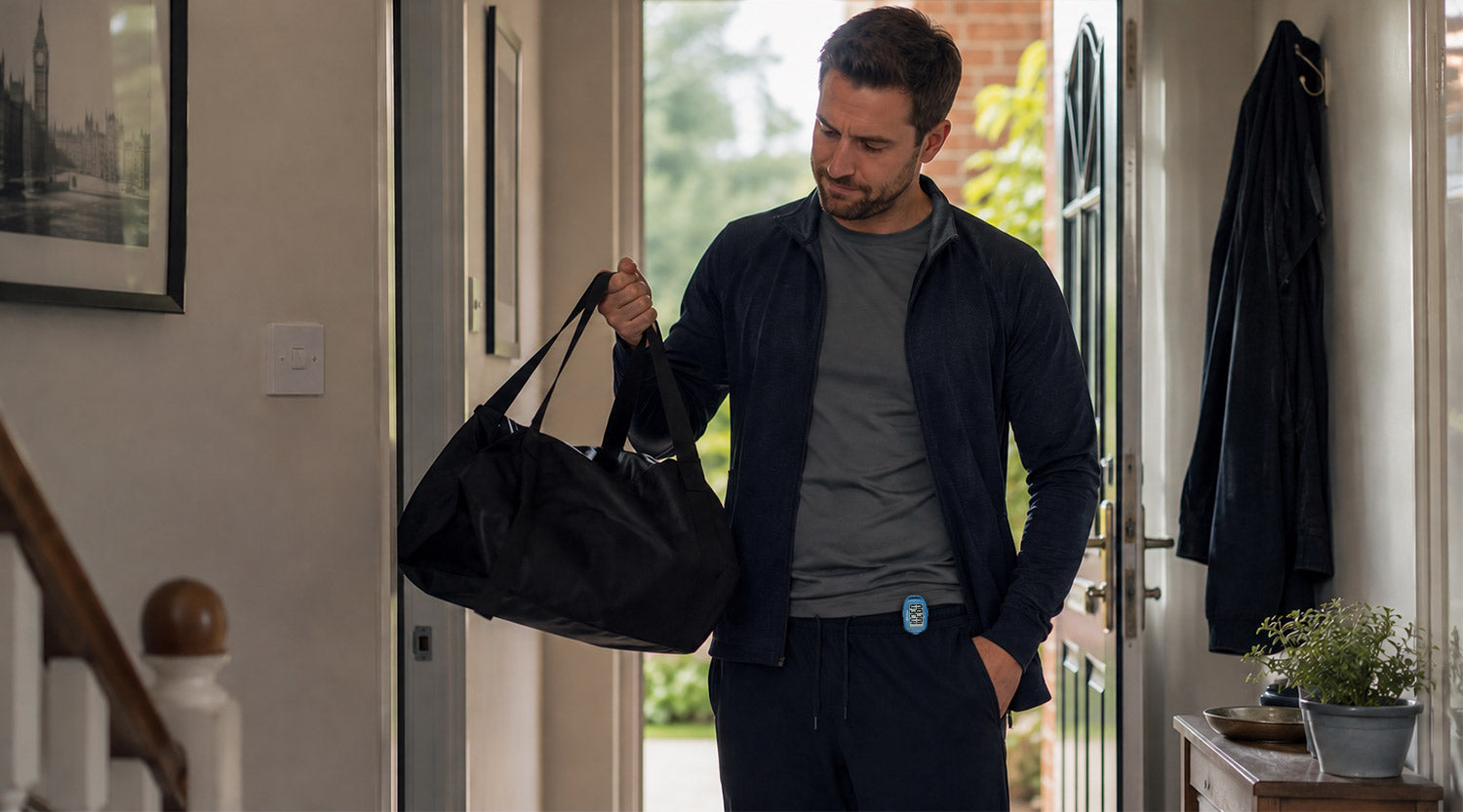
Step 3 - Track your steps from the moment you leave. Not on your phone - that requires unlocking it, which is the thing you're avoiding. A clip-on step counter like the 3DFitBud clips to your waistband, counts from the first step out your door and shows you the number when you get back. The number matters because it gives your brain a concrete reward for the habit rather than a vague sense of having done something healthy. Concrete rewards are what make habits stick.
-
Step 4 - Scroll after you're back. This is important. The habit isn't "never use your phone in the morning." It's "walk first, then do whatever you were going to do anyway." Most people find that once they've been outside and their cortisol response has done its work, the pull to scroll feels significantly less urgent. That shift is the whole point.

What Gets in the Way - And What to Do About It
-
"I'm not a morning person." The cortisol awakening response happens regardless of whether you identify as a morning person. What "not a morning person" usually describes is a circadian rhythm that's been shaped by late-night screen use. Walking in morning daylight for two weeks consistently shifts that rhythm. It's not permanent - it responds to behaviour.
-
"I don't have time." A 20-minute walk replaces 20 minutes of scrolling you were going to do anyway. The time is already there. The question is what you put in it first.
"The weather in August is unreliable." A light drizzle on a UK August morning still delivers enough ambient daylight to trigger the circadian benefit. Keep a waterproof by the door. The bar for "good enough weather to walk" is considerably lower than most people treat it.

FAQ's
-
Does it have to be before I check anything, or just before I start work?
Before you check anything - that's the specific mechanism. The cortisol awakening response completes in roughly 30 to 45 minutes post-waking. If you're scrolling in that window, you've already interrupted it before the walk has a chance to amplify it. Walk first, then check what you want. The order is everything here.
-
How long before this actually changes how my mornings feel?
Most people notice a difference within five to seven days - not dramatic, but real. The morning feels less cluttered. Starting tasks becomes slightly easier. The full shift in baseline morning energy takes two to three weeks of consistency, which is when the cortisol rhythm has genuinely recalibrated around the new input sequence.
-
Is this the same as the dopamine walk?
Related but different. The dopamine walk is specifically about protecting your brain's dopamine system from early-morning variable reward scrolling. Walk Before You Scroll is about the sequencing habit and what morning light plus movement does to your cortisol awakening response. Both involve going outside before your phone. The underlying mechanisms are different - and doing both simultaneously is exactly what this habit achieves.
-
Does the walk have to be in natural light, or does early morning before sunrise count?
Natural daylight is the specific trigger - the spectrum of light that signals your circadian clock. Before sunrise, ambient light is too low to produce the full effect. In August, sunrise in the UK is around 5:30am - so almost any morning walk is in usable daylight. If you're walking before 6am in winter, the benefit is reduced but the movement benefit still applies.
-
Why use a pedometer instead of just going for 20 minutes regardless of steps?
Time and steps aren't the same thing. A slow 20-minute walk covers different ground to a purposeful one. More practically - knowing your step count gives you a concrete number to look at when you get back, which acts as a daily reward signal. That feedback loop is what converts a three-day experiment into a six-week habit. A clip-on counter like the 3DFitBud does this without requiring you to get your phone out the moment you return, which is the exact behaviour you're trying to delay.
Walk First. Scroll Second. Track the Steps In Between.
The sequence is the entire habit. Walk before the phone comes out and you get the morning your biology was already preparing to give you. The 3DFitBud Simple Step Counter clips to your waistband and counts every step from the moment you leave your door - no phone, no setup, no reason to unlock anything. Check the number when you're back.
Shop the 3DFitBud Now